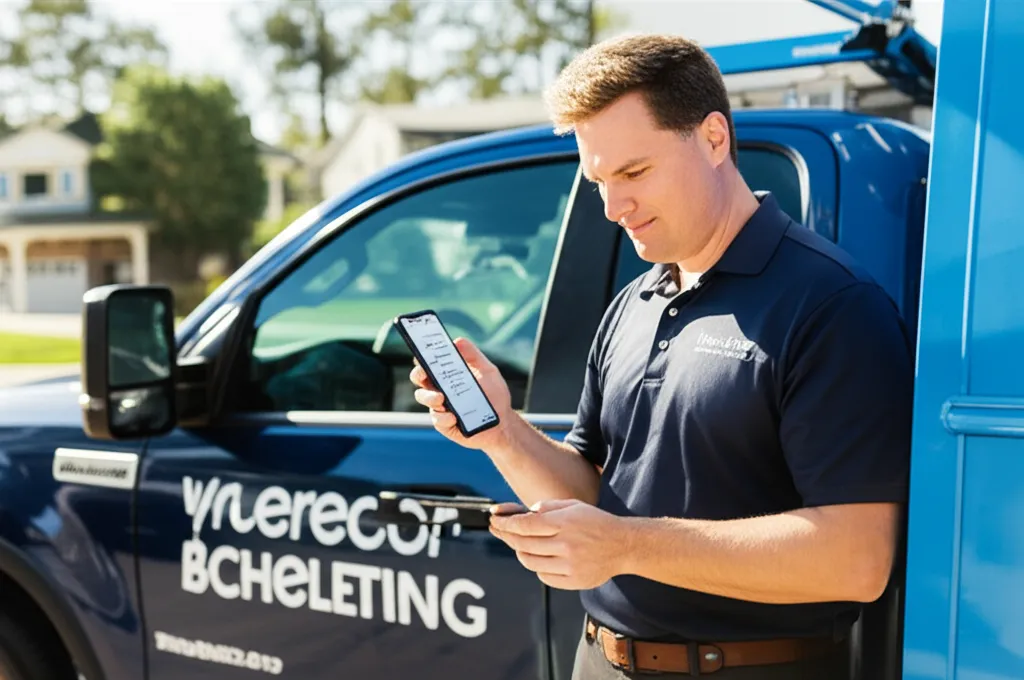
The 5-Minute Window That Makes or Breaks Your Business
Picture this: A homeowner's water heater just failed on a Sunday evening. Steam is rising from their basement, and they're frantically searching for an emergency plumber. They submit requests to five different contractors.
The contractor who responds first gets the job. It's that simple. Yet 78% of home improvement contractors still take over an hour to respond to new leads, essentially handing potential customers to their faster competitors.
In 2026, the average qualified lead is worth $3,200 to HVAC contractors, $2,800 to plumbers, and $4,100 to roofers. When you multiply that by the leads you're losing due to slow response times, the numbers become staggering.
This article will show you exactly how to build a speed-to-lead system that captures more qualified prospects and converts them into booked jobs within 24 hours. No more watching leads go cold while you're stuck in traffic or finishing another job.
Why Speed-to-Lead Is Your Secret Weapon in 2026
The landscape of contractor marketing has fundamentally shifted. Homeowners now expect immediate responses, and their patience window is shrinking every year.
Recent industry data shows that contractors who respond to leads within 5 minutes are 9 times more likely to connect with the prospect than those who wait just 30 minutes. Here's why this matters:
- Digital behavior has changed: Homeowners submit requests to multiple contractors simultaneously
- Urgency drives decisions: Emergency repairs can't wait for your convenience
- First contact wins: 78% of customers choose the first contractor who responds professionally
- Competition is fierce: Your competitors are reading the same statistics
| Response Time | Connection Rate | Conversion Probability | Average Job Value |
|---|---|---|---|
| 0-5 minutes | 78% | 42% | $3,200 |
| 5-30 minutes | 23% | 18% | $2,400 |
| 30+ minutes | 9% | 7% | $1,800 |
The message is clear: speed equals revenue. But speed without strategy leads to chaos. You need a systematic approach.
The Anatomy of a Qualified Lead (And How to Spot One)
Not all leads are created equal. Before we dive into speed strategies, you need to understand what makes a lead worth pursuing immediately versus one that can wait until tomorrow.
A qualified lead in the home improvement space typically exhibits three characteristics:
- Urgency indicators: Words like "emergency," "broken," "not working," or "ASAP" in their request
- Decision-making authority: They're the homeowner, not a tenant or family member researching options
- Budget readiness: They ask about timing and availability, not just pricing
Here's a real example: Sarah from Dallas submitted a lead request at 2:47 PM on a Tuesday: "Our AC stopped working this morning. House is getting hot with a newborn. Need someone today if possible. What's your availability?"
This lead scored high on all three qualifiers. The contractor who called her within 6 minutes booked a $4,800 system replacement that same day.
Red Flags: Leads That Aren't Worth the Rush
- Generic requests with no specific problem mentioned
- Multiple spelling errors or incomplete contact information
- Requests for "ballpark estimates" without site visits
- Messages from obvious lead generation companies
The 24-Hour Lead Conversion System: Step by Step
This is the exact system used by contractors averaging $2.3 million annually who convert 67% of their qualified leads within 24 hours.
- Immediate acknowledgment (0-5 minutes): Send an automated text confirming receipt and expected callback time
- First contact attempt (5-15 minutes): Call with a prepared script focusing on their specific problem
- Follow-up sequence (15 minutes-2 hours): If no answer, deploy text, email, and second call
- Value demonstration (2-4 hours): Send relevant photos of similar work you've completed
- Scheduling push (4-8 hours): Offer specific appointment slots for the next day
- Urgency reinforcement (12-24 hours): Final outreach emphasizing problem consequences
The key is systematic persistence without being pushy. Each touchpoint adds value while maintaining urgency.
Sample Text Message Templates
"Hi [Name], got your request about your [specific problem]. I'll call you in the next 10 minutes to discuss how we can help. - [Your Name], [Company]"
"[Name], couldn't reach you but wanted to share a similar [problem type] we fixed yesterday. [Link to photos]. Best time to call you back? - [Your Name]"
Technology Stack: Tools That Accelerate Your Response Time
Manual lead management is the enemy of speed. In 2026, successful contractors leverage technology to respond faster while maintaining personal touch.
Essential Tools for Speed-to-Lead Success
- Lead routing software: Automatically distributes leads to available team members
- Mobile CRM: Access lead information instantly from any location
- Automated messaging: Instant acknowledgment while you prepare for the call
- Call tracking: Monitor response times and call outcomes
- Photo libraries: Quick access to relevant before/after images
| Tool Category | Recommended Options | Monthly Cost | ROI Timeline |
|---|---|---|---|
| Lead Management | ServiceTitan, Housecall Pro | $150-400 | 2-4 weeks |
| Auto-Messaging | Podium, ServiceM8 | $89-199 | 1-2 weeks |
| Call Tracking | CallRail, CallTrackingMetrics | $45-150 | 3-6 weeks |
Investment in these tools typically pays for itself within the first month through increased conversion rates.
The Psychology of Immediate Response: What Homeowners Really Want
Understanding homeowner psychology is crucial for converting leads quickly. When someone submits a service request, they're often dealing with stress, inconvenience, or emergency situations.
Here's what's going through their mind:
- "Will this person actually show up?" - Reliability concerns based on past experiences
- "How much will this cost me?" - Budget anxiety, especially for unexpected repairs
- "Can they fix this quickly?" - Urgency about returning to normal life
- "Are they legitimate?" - Skepticism about contractor credibility
Your immediate response addresses the first concern instantly. A quick callback saying, "I got your request and I'm 15 minutes away from finishing another job. Can I swing by at 4 PM to take a look?" demonstrates reliability and availability.
Building Trust Through Speed
Fast response creates a psychological advantage called the "primacy effect." The first contractor who responds professionally becomes the reference point for all others. Subsequent contractors must work harder to displace that initial positive impression.
Qualifying Leads During the First Call: The 3-Question Formula
Speed without qualification wastes time and fuel. Your first call should accomplish two goals: demonstrate responsiveness and determine if this lead is worth pursuing.
Use this three-question qualification sequence:
- Problem confirmation: "Tell me more about what's happening with your [system/problem]"
- Timeline assessment: "How quickly do you need this resolved?"
- Decision authority: "Are you the homeowner, or should I include anyone else in our conversation?"
These questions reveal urgency level, decision-making process, and whether you're talking to the right person. Based on their answers, you can adjust your approach and scheduling priority.
Sample Qualification Script
"Hi [Name], this is [Your Name] from [Company]. I got your request about your [specific problem mentioned in lead]. I'm actually in your area right now. Tell me more about what's happening..."
This opening demonstrates immediate availability while gathering essential information.
Errors That Kill Your Lead Conversion (And How to Avoid Them)
Even contractors who respond quickly make critical mistakes that sabotage their conversion rates. Here are the five most costly errors:
Error #1: Generic Response Messages
What happens: Sending template messages that don't reference the specific problem mentioned in the lead.
Why it fails: Homeowners can tell you didn't read their request, making you seem unprofessional.
Solution: Always reference their specific problem in your first response. "Got your request about your water heater making loud noises..."
Error #2: Phone Tag Paralysis
What happens: Giving up after one or two unreturned calls.
Why it fails: Research shows it takes an average of 6 contact attempts to reach a new lead.
Solution: Implement a systematic 24-hour follow-up sequence using multiple communication channels.
Error #3: Information Overload
What happens: Overwhelming prospects with technical details during the first conversation.
Why it fails: Confused prospects don't buy; they look for simpler alternatives.
Solution: Focus on understanding their problem and offering to assess it in person.
Error #4: Pricing Without Context
What happens: Giving ballpark estimates over the phone without seeing the job.
Why it fails: Creates unrealistic expectations and commoditizes your service.
Solution: Explain why accurate pricing requires an in-person assessment.
Error #5: Weak Call-to-Action
What happens: Ending conversations with vague statements like "I'll call you back later."
Why it fails: Leaves the prospect uncertain about next steps and timing.
Solution: Always end with a specific commitment: "I'll be there Tuesday at 3 PM to assess the situation."
The Emergency Response Protocol: When Speed Really Matters
Some leads require immediate action - burst pipes, electrical hazards, or complete system failures. These emergency situations demand a different approach.
For emergency leads, implement this protocol:
- Immediate response (0-2 minutes): Call directly, bypass text messaging
- Safety assessment: Ensure the homeowner isn't in immediate danger
- Temporary solutions: Provide stopgap measures they can implement immediately
- Arrival commitment: Give specific arrival time and stick to it
- Regular updates: Text updates if you're running late
Emergency calls convert at nearly 90% when handled properly because you're solving an immediate crisis. Price becomes secondary to quick resolution.
Emergency Response Script Template
"Hi [Name], I got your emergency request. First, are you and your family safe? Good. Now, here's what you can do right now to prevent further damage while I'm driving to you..."
Measuring Success: KPIs That Matter for Lead Conversion
You can't improve what you don't measure. Track these key metrics to optimize your speed-to-lead system:
| Metric | Industry Benchmark | Top Performer Target | How to Improve |
|---|---|---|---|
| Average Response Time | 2.5 hours | Under 5 minutes | Automated routing, mobile alerts |
| Contact Rate | 35% | 65%+ | Multi-channel follow-up |
| Lead-to-Appointment | 28% | 45%+ | Better qualification scripts |
| Show Rate | 73% | 85%+ | Confirmation calls, precise scheduling |
Monitor these metrics weekly and adjust your processes based on performance trends.
Creating Your Lead Conversion Dashboard
Set up a simple dashboard tracking:
- Daily lead volume by source and type
- Response times for each team member
- Conversion rates by day and lead source
- Revenue attributed to fast response times
Review this data weekly with your team to identify improvement opportunities.
Scaling Your Speed-to-Lead System
As your business grows, maintaining rapid response times becomes challenging. Here's how successful contractors scale without sacrificing speed:
Team-Based Lead Distribution
Instead of handling all leads yourself, create a rotation system where available team members receive leads based on:
- Geographic proximity to the job site
- Specialty expertise matching the problem type
- Current availability and schedule flexibility
- Historical conversion rates for similar leads
Implement escalation rules: if the primary person doesn't respond within 10 minutes, automatically route the lead to the next available team member.
Seasonal Staffing Strategies
During peak seasons (HVAC summer emergencies, plumbing winter freeze-ups), consider:
- Part-time call handlers for initial response and scheduling
- Extended service hours to capture more emergency work
- Overflow partnerships with other contractors for capacity sharing
- Premium pricing for immediate response availability
What Top Performers Do Differently
After analyzing hundreds of contractor operations, the highest-converting businesses share specific characteristics that set them apart:
They Track Everything
Top performers measure not just response time, but response quality. They record calls, analyze successful conversations, and train their teams on proven scripts.
They Prepare for Peaks
Instead of being overwhelmed by busy periods, they anticipate demand spikes and prepare systems to handle increased volume without losing response speed.
They Prioritize Process Over Personality
While personal relationships matter, they don't rely on individual heroics. Their systems ensure consistent performance regardless of who handles the lead.
One contractor in Phoenix increased his annual revenue by $340,000 simply by implementing automated lead acknowledgment texts and reducing his average response time from 45 minutes to 3 minutes.
Building Your Action Plan: 30 Days to Lead Conversion Mastery
Here's your implementation roadmap to transform your lead conversion system:
Week 1: Foundation Setup
- Audit your current response times using call logs
- Set up automated acknowledgment messages
- Create qualification scripts for your team
- Establish baseline conversion metrics
Week 2: Technology Implementation
- Choose and install lead management software
- Set up mobile alerts and routing rules
- Create response templates for common scenarios
- Test the system with practice scenarios
Week 3: Team Training
- Train team members on qualification scripts
- Practice emergency response protocols
- Role-play different lead scenarios
- Establish accountability measures
Week 4: Optimization and Scaling
- Analyze first three weeks of performance data
- Adjust scripts and processes based on results
- Plan for capacity increases
- Set up ongoing performance monitoring
By the end of 30 days, you should see measurable improvements in response times, contact rates, and overall conversion performance.
The Revenue Impact of Getting This Right
Let's put this in perspective with real numbers. A typical HVAC contractor receives 50 leads per month. With industry average conversion rates of 28%, that's 14 new jobs.
By implementing a speed-to-lead system that increases conversion to 45%, the same contractor now books 22-23 jobs monthly. At an average job value of $3,200, that's an additional $28,800 in monthly revenue - over $345,000 annually.
The investment in tools, training, and system development typically runs $3,000-5,000. The return on investment? Usually achieved within the first month.
But the real advantage isn't just more revenue - it's predictable revenue. When you can convert leads systematically, you can forecast growth, plan capacity, and scale with confidence.
Key Takeaways: Your Path to Lead Conversion Mastery
Speed-to-lead isn't just about responding fast - it's about creating a systematic approach that turns more prospects into paying customers. Here are the essential elements:
- Respond within 5 minutes to maximize your connection probability
- Use technology strategically to automate acknowledgment while maintaining personal touch
- Qualify quickly and effectively using the three-question formula
- Follow up systematically across multiple channels over 24 hours
- Measure and optimize continuously based on performance data
The contractors winning in 2026 aren't necessarily the cheapest or most experienced - they're the fastest to respond and most systematic in their approach. While your competitors are still figuring out their lead management, you'll be booking jobs and building relationships.
Start today. Audit your current response time, set up one automated acknowledgment message, and commit to calling new leads within 15 minutes. That simple change alone will put you ahead of 80% of your competition.
What's your current average response time to new leads? And more importantly, what's it costing you in lost revenue every month?