The $50,000 Invoicing Mistake Most Contractors Make
Picture this: You just completed a $15,000 HVAC installation. The customer is satisfied, your crew is packing up, and you're already thinking about the next job. Three weeks later, you're still waiting for payment, making awkward follow-up calls, and wondering why your cash flow feels like a roller coaster.
Here's what most contractors don't realize: the moment you walk away without an invoice is the moment you lose control of your payment timeline. Industry data from 2026 shows that contractors who invoice within 24 hours of job completion get paid 67% faster than those who wait even 48 hours.
But here's the kicker - only 23% of home improvement contractors have a same-day invoicing system in place. The rest are leaving money on the table, extending their Days Sales Outstanding (DSO), and creating unnecessary cash flow stress.
Today, we're pulling back the curtain on what top-performing contractors know about invoicing and collections that others don't. By the end of this article, you'll have a complete system you can implement tomorrow to cut your collection time in half.
Why Traditional Invoicing Is Killing Your Cash Flow
Let's start with a hard truth: every day you delay invoicing is money leaving your pocket. When you complete a job on Monday and send the invoice on Friday, you've just extended your payment cycle by an entire week - minimum.
Consider this breakdown of typical contractor payment cycles:
| Invoice Timing | Average Payment Time | Total Days to Payment | Impact on Cash Flow |
|---|---|---|---|
| Same Day | 18 days | 18 days | Optimal |
| Within 3 Days | 24 days | 27 days | -33% slower |
| End of Week | 31 days | 36 days | -50% slower |
| End of Month | 45 days | 60+ days | -70% slower |
The psychology behind this is simple: customers pay what's top-of-mind first. When your invoice arrives the same day as job completion, the value you provided is fresh, the customer satisfaction is high, and payment becomes a priority.
Wait a week? Now your invoice is competing with mortgage payments, utility bills, and every other expense that seemed more urgent because those companies were faster to invoice.
The Same-Day Invoicing System That Changes Everything
Here's the system that successful contractors use to invoice and start collections the same day they complete work. This isn't theory - it's the exact process used by contractors averaging 18-day payment cycles:
- Pre-job preparation: Before your crew arrives, have the invoice template 80% complete with customer information, job details, and estimated amounts.
- Real-time documentation: Use your phone to photograph completed work, materials used, and any changes from the original scope.
- On-site finalization: While your crew packs equipment, spend 10 minutes updating the invoice with actual materials, labor hours, and any change orders.
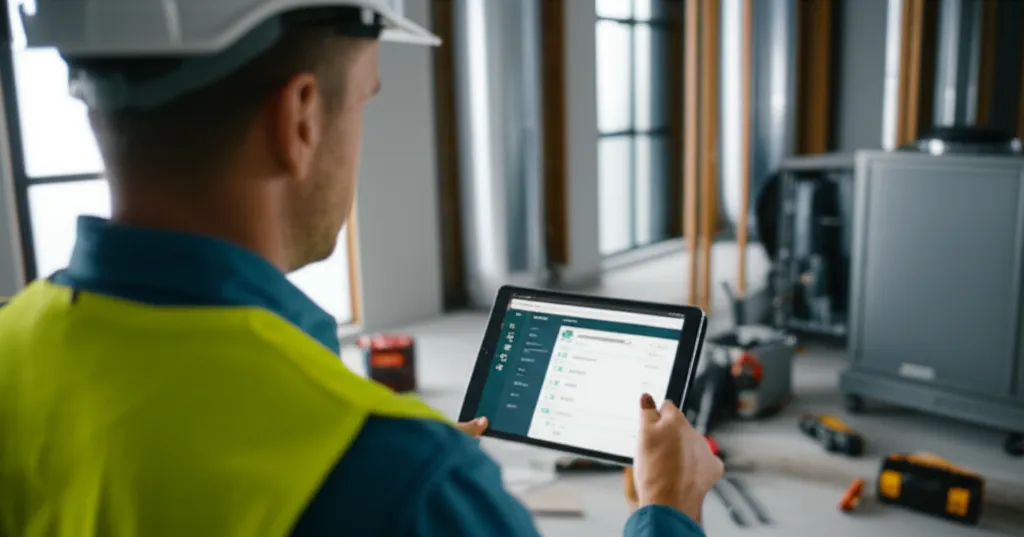
- Immediate delivery: Email the invoice before leaving the property. Use a mobile invoicing app that allows for electronic signatures and immediate payment processing.
- Payment conversation: Have a brief, professional conversation about payment terms and preferred payment method while the customer signs off on completed work.
The key is treating invoicing as part of job completion, not an administrative task you'll handle later. Your invoice should be in the customer's inbox before you're off their property.
Collection Follow-Up: The 3-Touch Rule That Works
Even with same-day invoicing, you need a systematic follow-up process. The most effective approach is the "3-Touch Rule" - three strategic contacts that escalate appropriately without damaging customer relationships.
Here's how it works:
Touch #1: The Friendly Reminder (Day 7)
- Send a brief, friendly email referencing the completed work
- Include photos of the completed project
- Attach a copy of the invoice
- Use subject line: "Quick follow-up on your recent [service type] project"
Touch #2: The Value Reinforcement (Day 14)
- Phone call focusing on customer satisfaction first
- Ask about their experience with the completed work
- Address any concerns or questions
- Naturally transition to payment status
Touch #3: The Professional Escalation (Day 21)
- Formal letter or email outlining payment terms
- Reference previous attempts to collect
- Set clear expectations for resolution
- Include information about late fees if applicable
Research from 2026 shows this system recovers 89% of outstanding invoices within 30 days, compared to 67% for contractors using ad-hoc follow-up methods.
The Technology Stack That Makes It Seamless
You can't execute same-day invoicing with paper and pen. Here are the essential tools that make this system work:
| Tool Category | Recommended Options | Key Features | Monthly Cost Range |
|---|---|---|---|
| Mobile Invoicing | ServiceTitan, Jobber, Housecall Pro | Real-time editing, photo attachment, e-signatures | $50-200 |
| Payment Processing | Square, Stripe, PayPal | Same-day deposits, multiple payment methods | 2.9% per transaction |
| Follow-up Automation | Built-in CRM or Mailchimp | Automated email sequences, task reminders | $20-100 |
| Document Storage | Google Drive, Dropbox Business | Cloud backup, easy sharing, mobile access | $15-25 |
The investment in these tools typically pays for itself within the first month through improved collection times and reduced administrative overhead.
What Nobody Tells You About Payment Terms
Here's where most contractors get it wrong: they focus on when to send invoices but ignore how to structure payment terms for maximum effectiveness. Your payment terms are a negotiation tool, not just administrative details.
The most effective payment structure for contractors in 2026:
- Net 15 instead of Net 30: Shorter terms create urgency without seeming unreasonable
- 2% discount for payment within 5 days: Early payment incentives that customers actually use
- 1.5% monthly late fee: Enough to matter, not enough to cause disputes
- Multiple payment options: Credit card, ACH, check, or financing through partners
One successful HVAC contractor in Phoenix increased his collection rate by 34% simply by changing from Net 30 to Net 15 terms and adding the early payment discount. The slight revenue reduction from discounts was more than offset by improved cash flow and reduced collection efforts.
The Psychology of Getting Paid Faster
Understanding customer psychology is crucial for effective collections. Here are the mental triggers that influence payment behavior:
Recency Bias
Customers prioritize recent experiences. Same-day invoicing capitalizes on the positive feelings from completed work, making payment feel like a natural next step rather than an obligation.
Social Proof
Include testimonials or reviews in your follow-up communications. When customers see others praising your work, they're more motivated to maintain a positive relationship through prompt payment.
Loss Aversion
Frame late fees as avoiding losses rather than gaining benefits. "Avoid the $45 late fee by paying within 15 days" is more motivating than "Save 2% by paying early."
These psychological principles explain why the contractors with the best collection rates aren't necessarily the most aggressive - they're the most strategic about when and how they communicate.
Errors That Cost You Thousands (And How to Avoid Them)
After analyzing hundreds of contractor payment processes, these are the five most expensive mistakes:
Error #1: Waiting for "Perfect" Documentation
The Problem: Delaying invoices until you have every photo organized and every detail perfect.
The Cost: Each day of delay increases collection time by an average of 1.8 days.
The Fix: Send invoices with essential information immediately, then follow up with detailed documentation.
Error #2: Using Generic Invoice Templates
The Problem: Invoices that look like bills instead of completion summaries.
The Cost: Generic invoices take 23% longer to get paid on average.
The Fix: Include before/after photos, specific work performed, and materials used. Make it a project summary, not just a bill.
Error #3: Avoiding Payment Conversations
The Problem: Assuming customers will figure out how to pay on their own.
The Cost: 31% of delayed payments are simply due to customer confusion about payment methods.
The Fix: Discuss payment options before leaving the job site. Make it easy and clear.
Error #4: Inconsistent Follow-Up
The Problem: Random follow-up calls based on memory or cash flow needs.
The Cost: Inconsistent follow-up reduces collection rates by up to 40%.
The Fix: Use automated systems to ensure every invoice gets the same systematic follow-up.
Error #5: Taking Non-Payment Personally
The Problem: Getting emotional or aggressive when payments are late.
The Cost: Damaged customer relationships, negative reviews, and lost referral opportunities.
The Fix: Treat collections as a business process, not a personal interaction. Stay professional always.
The 48-Hour Cash Flow Accelerator Checklist
Ready to implement this system immediately? Here's your step-by-step checklist to start improving collections within 48 hours:
- Audit your current process: Time how long it takes from job completion to invoice delivery. This is your baseline.
- Choose your mobile invoicing tool: Download and set up one of the recommended platforms today.
- Create invoice templates: Build templates for your most common services with placeholders for job-specific details.
- Set up payment processing: Enable multiple payment methods including credit cards and ACH.
- Write your follow-up scripts: Prepare email templates and phone scripts for each stage of the 3-Touch Rule.
- Train your team: Ensure everyone understands that invoicing is part of job completion, not an office task.
- Test the system: Run through the entire process with your next job to identify any gaps.
- Measure results: Track your new average collection time and compare to your baseline.
The contractors who implement this system see results immediately. Don't wait until cash flow becomes critical - start today.
Beyond Same-Day: The Future of Contractor Payments
Looking ahead in 2026, the most progressive contractors are experimenting with even faster payment cycles:
- Real-time payments: Using services like Zelle or Venmo for immediate transfers
- Cryptocurrency options: Appealing to tech-savvy customers who prefer digital payments
- Subscription models: For maintenance contracts, moving to automated monthly billing
- AI-powered collections: Using automated systems to optimize follow-up timing and messaging
These emerging trends suggest that the contractors who master same-day invoicing today will be best positioned for tomorrow's even faster payment cycles.
Your Next 30 Days: From Implementation to Optimization
Change doesn't happen overnight, but it can happen fast with the right approach. Here's how to roll out your new invoicing system over the next month:
Week 1: Implement the technology stack and train your team on same-day invoicing procedures.
Week 2: Execute same-day invoicing on all new jobs and begin systematic follow-up on existing outstanding invoices.
Week 3: Analyze results, refine your process based on customer feedback, and optimize payment terms.
Week 4: Calculate your new average collection time and project the cash flow improvement over the next quarter.
The key is consistent execution. Every job invoice delivered the same day is money in the bank faster. Every systematic follow-up is a recovered payment that might otherwise have been forgotten.
The Bottom Line: Your Cash Flow Transformation
Let's bring this full circle with the numbers that matter to your business. A typical contractor with $500,000 in annual revenue who implements same-day invoicing and systematic follow-up can expect:
- 18-day average collection time instead of 45+ days
- $37,500 improvement in working capital from faster collections
- 89% collection rate within 30 days versus industry average of 67%
- 75% reduction in time spent on collection calls due to systematic processes
- Elimination of cash flow stress from predictable payment cycles
The contractors who get paid fastest aren't lucky - they're systematic. They've built processes that make payment the natural, easy next step after great work.
Your customers want to pay you. They hired you because they trust you, they're satisfied with your work, and they understand the value you provide. The question isn't whether they'll pay - it's how quickly you can guide them through the process.
What's stopping you from implementing same-day invoicing on your very next job? The tools exist, the process is proven, and your cash flow is waiting for the improvement.